
Watering
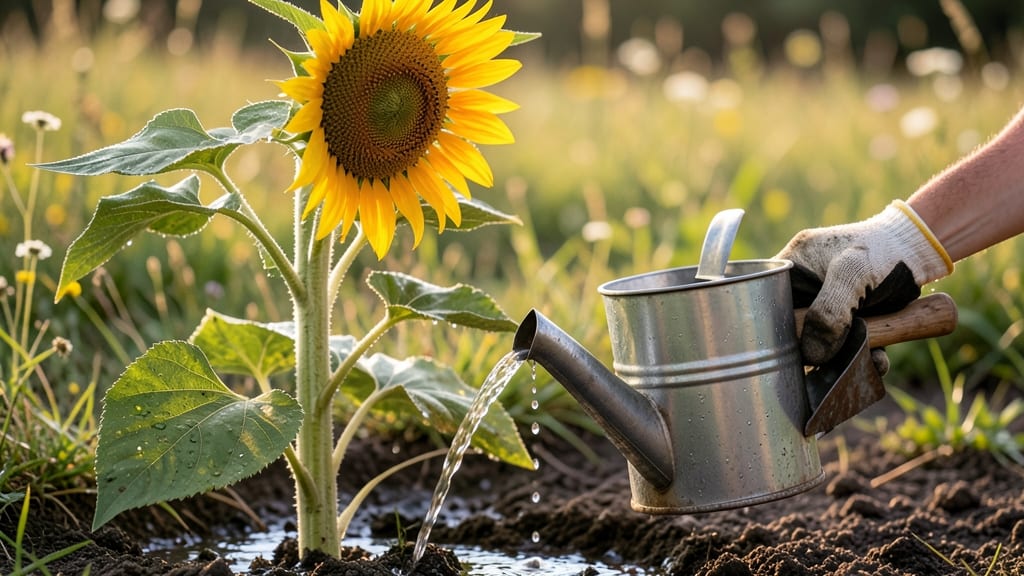
Watering sunflower plants the right way is the secret to growing those 12-foot-tall giants that turn heads in your garden. Too much water, and their roots suffocate; too little, and they’ll struggle to reach their towering potential.
The key lies in deep, consistent moisture that encourages strong root development and vibrant blooms.
If you’ve ever planted sunflowers 🌻 only to watch them wilt despite your best efforts, you’re not alone. Many gardeners make the same mistake: watering just the surface without reaching deep into the soil where roots thirst for hydration.
I’ll show you exactly how to water for maximum growth, from seedlings to full bloom.
What you’ll discover here are the science-backed techniques that keep sunflowers thriving in Zone 6a climates. We’ll cover everything from the ideal watering schedule to signs your plants are thirsty or drowning. Ready to grow sunflowers that stand taller than your expectations?
Let’s dive into the deep-soil methods that transform weak stems into sturdy stalks capable of supporting those iconic golden faces. Your sunflowers will thank you—with height you can’t ignore.


How deep and how often to water sunflower roots for maximum growth
Sunflowers 🌻 thrive when their roots receive the right amount of water at the right depth. Unlike many plants, sunflowers need deep watering to encourage strong root systems that support their towering growth.
The key is to water 12-18 inches deep—this ensures moisture reaches where the roots are actively growing, not just the surface layer.
Think of it like building a skyscraper: shallow watering is like pouring concrete only on the foundation. Your sunflower’s roots need to grow deep to access nutrients and water, which is why deep, infrequent watering works better than frequent shallow sprinkles.
This method also reduces evaporation and fungal risks that come with wet foliage.
Now, let’s talk about frequency. Young seedlings need daily watering for the first week, but as they grow, you’ll adjust the schedule. The goal is to keep the soil consistently moist but never soggy.
Overwatering is just as damaging as underwatering—it can lead to root rot and weaken your plants before they even reach their full height.
| Growth Stage | Watering Depth | Frequency | Soil Moisture Goal |
|---|---|---|---|
| Seedling (0-2 weeks) | 4-6 inches | Daily (keep soil damp) | Moist, not saturated |
| Vegetative (2-6 weeks) | 12-18 inches | Every 3-4 days | Deeply moist |
| Budding (6-10 weeks) | 18-24 inches | Every 5-7 days | Consistently moist |
| Flowering (10+ weeks) | 24+ inches | Every 7-10 days | Deeply hydrated |
For seedlings, focus on keeping the top 4-6 inches of soil moist. Use a spray bottle or gentle watering can to avoid disturbing the delicate stems. Once they’re a few inches tall, switch to deeper watering.
A soaker hose or drip irrigation is perfect for this—it delivers water directly to the roots without wetting the leaves, reducing disease risk.
When your sunflowers enter the vegetative stage (around 2-6 weeks), increase the depth to 12-18 inches. This encourages roots to grow deeper, which is crucial for supporting their eventual height.
Stick your finger 3-4 inches into the soil—if it’s dry, it’s time to water. If it’s still moist, wait another day or two.
During the budding stage (6-10 weeks), your sunflowers are preparing for their dramatic growth spurt. This is when they need the most water—18-24 inches deep—to support their rapid development.
Water every 5-7 days, but always check the soil first. Overwatering now can cause the stems to weaken, leading to flopping or breaking under their own weight.
In the flowering stage (10+ weeks), reduce frequency slightly to every 7-10 days, but keep the watering depth at 24+ inches. This ensures the plant has enough moisture to support the heavy flower heads and seed development.
If you notice the petals wilting during the day, it’s a sign they need more water—give them a deep drink in the morning to revive them.
If your sunflowers show signs of stress—yellowing leaves, wilting, or slow growth—don’t panic. Often, it’s a sign of drought or overwatering.
To recover, adjust your watering schedule and mulch around the base with 2-3 inches of organic mulch (like straw or shredded leaves) to retain moisture and regulate soil temperature. This also suppresses weeds, which compete for water.
For drought recovery, water deeply every 2-3 days for a week, then return to your normal schedule. Avoid letting the soil dry out completely, as this can shock the roots.
If your plants are severely wilted, trim any damaged leaves and give them a light fertilizer (like a 10-10-10 blend) to help them bounce back.
Pro tip: Water in the early morning (before 10 AM) to allow foliage to dry quickly, reducing fungal diseases like powdery mildew. Avoid evening watering, as wet leaves overnight create the perfect conditions for mold.
With these deep-soil techniques, your sunflowers will grow tall, strong, and ready to turn heads in your garden. 🌻
Common sunflower watering mistakes that stunt growth (and how to fix them)
Even the hardiest sunflowers 🌻 can struggle if you’re not watering them the right way. I’ve seen sunflower stalks bend under their own weight because their roots weren’t getting the deep hydration they needed.
The good news? Most watering mistakes are easy to fix once you know what to look for.
Sunflowers need consistent moisture at their roots, not just a quick sprinkle at the surface. When I first grew sunflowers, I made the same mistake many beginners do: watering lightly every day instead of deeply every few days. This leads to shallow root systems that can’t support those towering plants.
Here are the 5 most common mistakes that stunt sunflower growth—and exactly how to correct them for plants that reach their full potential.
⚠️ Watering Too Shallowly
Problem: Light surface watering encourages roots to stay near the top, making plants weak and prone to toppling. Sunflowers need water 6-12 inches deep to develop strong taproots.
Fix: Use a soaker hose or garden fork to create deep water channels. Water until moisture reaches 10-12 inches down—you’ll see roots grow deeper within days.
Another big mistake is watering on a schedule rather than checking soil moisture. I used to set a reminder for every 3 days, but that doesn’t account for rainfall, heatwaves, or soil type.
Instead, stick your finger 2 inches into the soil—if it’s dry, water deeply. If it’s still moist, wait another day.
Poor drainage is another silent growth killer. If your soil stays soggy after watering, sunflower roots suffocate from lack of oxygen. This is especially common in clay-heavy soils. The fix? Amend your soil with compost or perlite to improve drainage before planting.
Don’t forget about mulching—a 2-3 inch layer of straw or wood chips keeps moisture locked in while blocking weeds. I’ve seen sunflowers in mulched beds thrive with 30% less watering than unmulched plants. Just keep mulch 2 inches away from the stem to prevent rot.
Finally, watering at the wrong time can cause fungal issues. Always water in the early morning so leaves dry quickly. Nighttime watering leaves moisture on foliage, creating perfect conditions for powdery mildew—a common sunflower enemy.