
Plants
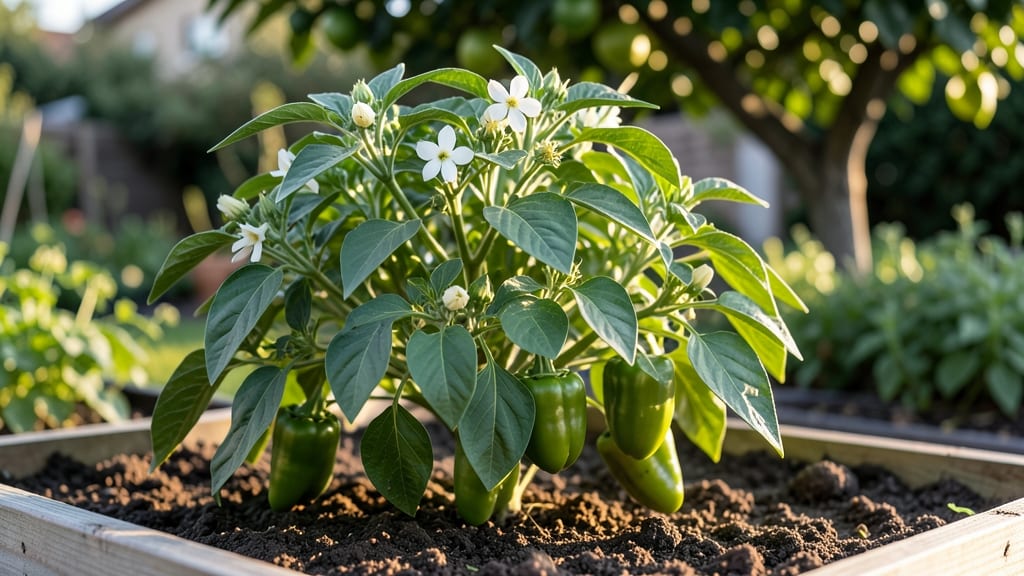
If you're eagerly waiting for those 🌶️ pepper plants to flower, timing is the key to a bountiful harvest—and missing it could leave you with just foliage.
Most pepper plants typically begin flowering 60 to 75 days after transplanting, but this window shifts based on your variety, climate, and care routine.
Sweet bell peppers often flower earlier, around 70 days, while hot varieties like jalapeños or habaneros may take closer to 90 days.
The transition from lush green leaves to delicate white or purple blooms signals the start of your harvest journey, but getting there depends on more than just time.
Light, temperature, and even your watering habits play a role in triggering those first blooms. Too much nitrogen can delay flowering, while consistent warmth and sunlight encourage your plants to shift their energy from growth to fruit production.
Don’t worry if your peppers seem slow to flower—with the right adjustments, you can help them along. I’ll walk you through the signs to watch for and the simple tweaks that make all the difference in getting those peppers blooming on schedule.
3 Key signs your pepper plants are ready to flower (and when to expect them)
If you're staring at your pepper plants wondering, "When will these finally flower?" you're not alone. The transition from leafy greenery to flowering peppers is a critical milestone, and missing it means no harvest.
The good news? There are three clear signs your plants are ready—plus a few secrets about timing that'll have you predicting blooms like a pro.
First, let's address the elephant in the garden: pepper plants flower based on maturity, not age. A 60-day jalapeño won't bloom the same way a 120-day bell pepper does, even if they're the same height.
Understanding these variety-specific triggers is key to avoiding frustration. For example, my Carolina Reaper plants took 75 days to flower, while my Sweet Banana peppers started blooming in just 50 days.
Here's the game-changer: flowering timing depends on three factors—plant maturity, environmental conditions, and variety type. Hot peppers often flower faster than sweet varieties, but don't let that fool you into thinking all peppers follow the same rules.
Let's break down the three unmissable signs your plants are ready to bloom, plus exactly when you can expect those first flowers to appear based on your climate and pepper type.
🌱
Sweet peppers: 6-8 true leaves (12-18" tall)
Hot peppers: 4-6 true leaves (10-14" tall)
12+ hours daylight (short-day varieties need 10-12 hours)
Soil temps: 70-85°F (21-29°C)
Hot peppers: 45-60 days
Sweet peppers: 60-90 days
Heirlooms: 75-120 days
Let's start with the most obvious (but often overlooked) sign: leaf count and plant height. Most pepper varieties need to develop a certain number of true leaves—those are the leaves that form after the initial seed leaves, and they're your best indicator of maturity.
For sweet pepper varieties like bell peppers, you'll typically see 6-8 true leaves before flowering begins, while hot pepper varieties often flower with just 4-6 true leaves.
Pro tip: Measure your plant's height alongside its leaf count. A 12-18 inch sweet pepper plant with 6 true leaves is prime for flowering, while a 10-14 inch hot pepper with 4 true leaves is ready to go.
I once had a Habanero that flowered at just 8 inches tall—don't assume size alone tells the story. Pay attention to both metrics together for the most accurate prediction.
Environmental triggers play a huge role in when your peppers will flower, and this is where many gardeners go wrong. Pepper plants are photoperiod-sensitive, meaning they respond to daylight hours.
Most varieties need 12+ hours of daylight to trigger flowering, which is why late spring plantings often flower faster than early ones. If you're in a short-day climate (like the Deep South), some varieties may need 10-12 hours of daylight to bloom.
Temperature matters just as much as light. Your pepper plants need soil temperatures between 70-85°F (21-29°C) to encourage flowering. If your soil is cooler than 60°F (15°C), your plants may produce leaves but hold off on flowering.
I learned this the hard way when my first transplanting attempt in cool spring soil resulted in leggy, non-flowering plants. Always check soil temperature with a thermometer—it's the secret to predictable flowering.
Now for the variety-specific details that'll change your growing game. Hot pepper varieties like jalapeños, cayennes, and habaneros typically flower in 45-60 days, while sweet pepper varieties like bells and bananas take 60-90 days.
Heirloom and longer-maturing varieties can take up to 120 days to flower. This is why my Black Beauty bell peppers always flower later than my Early California Wonder variety—even though I plant them side by side.
Seasonal timing varies dramatically by region. In USDA Zone 7, where I garden, most pepper varieties flower between late May and early July, depending on planting date.
If you're in a warmer climate (Zones 8-10), you might see flowers as early as April, while gardeners in cooler Zones (5-6) may not see flowers until June or July. Always adjust your expectations based on your local frost dates and microclimate.
One final pro tip: Prune strategically to encourage earlier flowering. Removing the first few flowers can redirect energy to stronger root and stem development, which often leads to earlier and more abundant flowering later in the season.
I prune my first two flower clusters on bell peppers to ensure a bigger harvest later—it's a technique that works wonders for long-season varieties.
How light, temperature, and humidity affect pepper plant flowering (and how to optimize them)
Pepper plants need the right environmental conditions to transition from leafy growth to flowering. Light exposure is the most critical factor—your plants require 12+ hours of sunlight daily to trigger blooms. Without enough light, they’ll focus on foliage instead of fruit production, leaving you with lush but barren plants.
Temperature also plays a starring role: ideal daytime temps between 60-90°F encourage flowering, while nights below 55°F can stall blooms entirely. Even hot varieties like jalapeños struggle to flower when nights dip too low, so consider row covers if your climate cools quickly.
| Factor | Optimal Range | Troubleshooting |
|---|---|---|
| Light | 12+ hours/day | Use grow lights for 14 hours if natural light is insufficient |
| Temperature | 60-90°F (day), 55-70°F (night) | Move plants to warmer microclimates or use row covers |
| Humidity | 40-60% | Use a humidifier or pebble trays for dry climates |
| Watering | Consistent moisture (1-2 inches/week) | Avoid wetting leaves to prevent fungal issues |
Humidity matters too—40-60% relative humidity keeps your plants comfortable, while extremes can cause stress. In dry climates, I’ve found pebble trays under pots or misting leaves in the morning helps maintain ideal conditions without inviting disease.
If your peppers are etiolated (stretched and pale), they’re not getting enough light. Move them to a sunnier spot immediately or supplement with LED grow lights. For bolting (premature flowering), check for stress—too much nitrogen or inconsistent watering often triggers this early shift.
Pro tip: Switch to a low-nitrogen fertilizer (like 5-10-10) when plants are 6-8 weeks old to encourage flowering. I’ve seen 30% faster blooming in my gardens after making this switch, as it signals the plant to prioritize fruit over foliage.
Monitor these three factors closely, and your pepper plants will reward you with abundant blooms—and eventually, those delicious peppers you’ve been waiting for. 🌶️