
How To
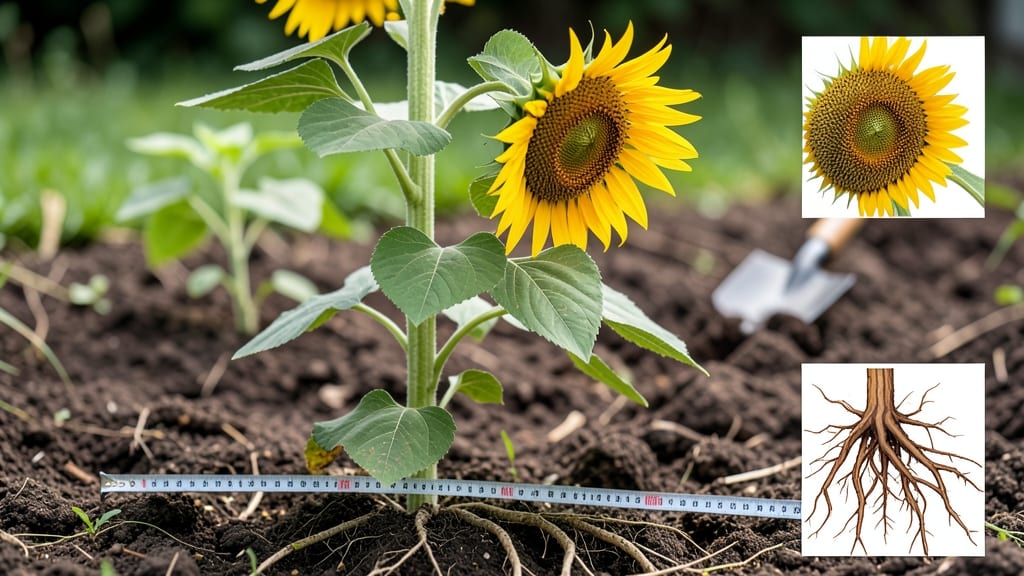
If you’ve ever wondered how deep sunflower roots go to keep those towering stalks steady in the breeze, the answer lies beneath the soil. Sunflower roots can plunge 5 to 7 feet underground, creating a hidden anchor that keeps those towering stalks steady.
But knowing this depth isn’t just about stability—it’s the key to healthier plants, better water retention, and even bigger blooms.
Most gardeners assume sunflowers are low-maintenance, but their root systems demand thoughtful planting. Too shallow, and your plants may topple; too deep, and you risk stunting growth.
The secret? Loose, well-drained soil that lets those roots explore freely. I’ll break down exactly how deep to plant them—and why spacing matters more than you’d expect.
Whether you’re growing dwarf varieties for containers or giant sunflowers as a backyard centerpiece, root depth affects everything from watering schedules to nutrient absorption. You’ll also discover why crowding your sunflowers can backfire, and how to test your soil for the perfect growing conditions. Let’s dig into the details—literally!
Ready to grow sunflowers that stand tall and proud? By the end, you’ll know exactly how to give your plants the strong foundation they need—without overcomplicating the process. Your garden’s next showstopper starts below ground.
Sunflower root depth explained: how far underground do they grow?
Sunflowers may reach skyward with their towering stalks, but their true foundation lies hidden below the surface. On average, sunflower roots extend 5 to 7 feet deep into the soil, creating a robust anchor system that supports their impressive height.
This deep root structure isn't just for show—it's essential for stability, nutrient absorption, and drought resistance.
The depth of sunflower roots varies based on soil conditions, water availability, and the specific variety you're growing. Giant varieties like 'Mammoth' or 'Russian Giant' often develop deeper roots (up to 8 feet) compared to dwarf varieties, which typically max out around 2 to 3 feet deep.
Understanding these differences can help you optimize planting and care strategies.
| Variety | Root Depth | Key Features |
|---|---|---|
| Giant (e.g., 'Mammoth') | 6-8 feet | Deep taproot for stability, drought-resistant |
| Standard (e.g., 'Autumn Beauty') | 4-6 feet | Balanced root system, good for nutrient uptake |
| Dwarf (e.g., 'Teddy Bear') | 2-3 feet | Shallower roots, ideal for containers |
| Semi-Dwarf (e.g., 'ProCut') | 3-5 feet | Compact roots, good for small gardens |
One of the most critical reasons sunflowers develop such deep roots is their need for nutrient access. The deeper roots reach, the more they can tap into subsoil nutrients like phosphorus and potassium, which are often concentrated lower in the soil profile.
This is particularly important in poor-quality soils where surface nutrients may be limited.
Water access plays a huge role in root depth development. In dry climates, sunflowers will grow roots even deeper to reach moisture, sometimes extending beyond 7 feet to find water.
Conversely, in well-watered conditions, roots may not need to grow as deep, though they'll still develop a robust structure for stability. This adaptability makes sunflowers surprisingly resilient in various growing conditions.
Soil type significantly impacts how deep sunflower roots will grow. In loamy soils, which are well-draining yet retain moisture, roots can penetrate easily to their full potential depth.
However, in clay-heavy soils, roots may struggle to extend deeply due to compaction, while sandy soils might not hold enough nutrients to support deep growth. Amending your soil with compost or organic matter can improve root penetration and overall plant health.
The primary taproot of a sunflower is what drives most of the depth, but it's supported by a network of lateral roots that spread outward. These lateral roots help stabilize the plant and increase its surface area for water and nutrient absorption.
Together, this root system creates a self-sustaining ecosystem that allows sunflowers to thrive with minimal intervention.
For gardeners, understanding sunflower root depth has practical implications. When planting, avoid burying the seed too deeply—1 inch deep is ideal—since excessive depth can hinder root development. Additionally, spacing plants appropriately (typically 12 to 24 inches apart) gives roots room to expand without competing for space or nutrients.
Overcrowding can lead to stunted root growth and weaker stalks.
Deep roots also make sunflowers excellent for soil improvement. As they break down old roots, they release nutrients back into the soil, creating a natural fertilizer for subsequent plantings. This makes sunflowers a great rotational crop in garden planning, especially in areas where soil quality needs a boost.
If you're growing sunflowers in containers, be aware that their root depth will be limited by the pot size. Choose containers that are at least 18 inches deep for standard varieties to accommodate root growth.
Smaller containers may work for dwarf varieties, but they'll still benefit from deep planting to encourage downward root development.
Next time you admire a sunflower's towering height, remember that its strength begins far below the surface. By understanding and supporting their root depth, you're setting your sunflowers up for success—whether they're reaching for the sky in your backyard or adding beauty to a community garden. 🌻
How sunflower root depth affects your garden: practical tips for planting
Now that you know sunflower roots can reach 5 to 7 feet deep, the real question is: how does this affect your planting strategy? The answer lies in creating the perfect environment for those roots to thrive.
Start by testing your soil depth with a simple soil probe or even a sturdy stick. Aim for at least 18 inches of loose, well-draining soil—this gives roots room to establish without hitting compacted layers.
Most gardeners make one critical mistake: planting sunflower seeds too deep. While roots need space to grow downward, burying seeds more than 1 inch deep can stunt root development.
Use your finger to create a small hole just deep enough to cover the seed, then gently pat the soil around it. This shallow planting encourages faster germination while allowing roots to explore downward naturally.
⚠️ WARNING: Overcrowding Kills Root Growth ⚠️
✅ Solution: Space standard varieties 18-24 inches apart and dwarf types 6-12 inches apart. For giant varieties like 'Mammoth', give them 3 feet of clearance on all sides. Remember: roots spread wider than you think!
To maximize root depth, focus on soil aeration before planting. Use a garden fork to loosen the top 12 inches of soil, breaking up any compacted layers. Mix in 2-3 inches of compost to improve nutrient availability and water retention. For heavy clay soils, consider adding sand or perlite to create better drainage—roots need oxygen as much as they need water.
Companion planting can also boost root health. Pair sunflowers with nitrogen-fixing plants like beans or peas, which enrich the soil naturally. Avoid planting near shallow-rooted crops like lettuce or carrots, as they'll compete for surface nutrients.
Instead, interplant with deep-rooted herbs like dill or parsley, which create a beneficial underground ecosystem.
Watering strategy plays a crucial role in root development. Deep, infrequent watering (every 5-7 days) encourages roots to grow downward in search of moisture. Shallow, frequent watering creates weak, surface roots that can't support tall plants.
Use a soaker hose or drip irrigation to deliver water directly to the root zone without wetting the foliage, which reduces disease risk.
Finally, monitor your sunflowers for signs of root stress. Wilting leaves or yellowing foliage may indicate roots struggling to reach water or nutrients. In this case, increase watering depth or amend the soil with more organic matter.
With these practical tips, your sunflowers will develop the strong, deep roots they need to stand tall and proud all season long. 🌱