
Plants
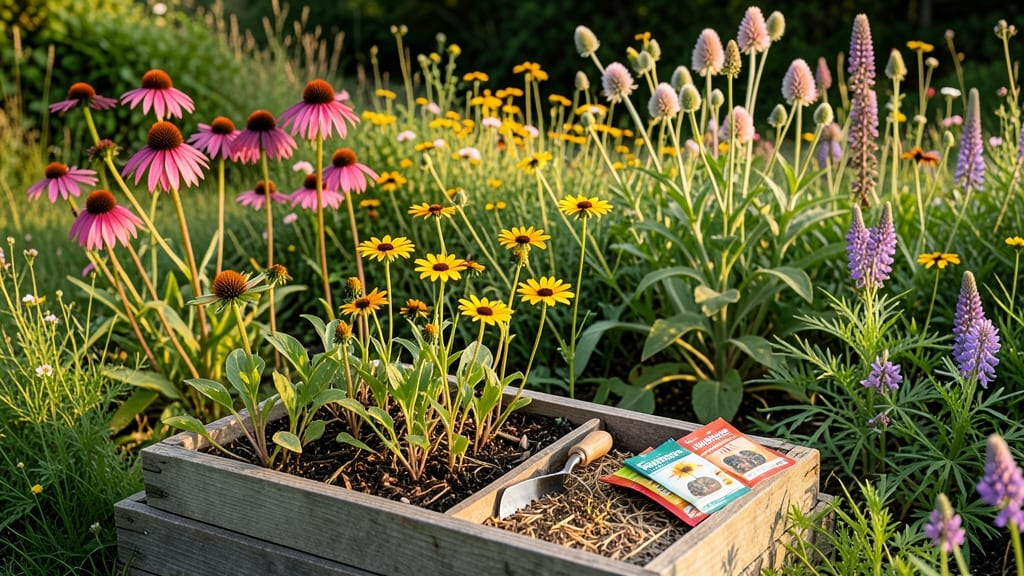
Timing when to plant wildflower seeds in Wisconsin just right isn’t just about following a calendar—it’s about outsmarting the state’s unpredictable frost cycles. Plant too early, and a late freeze will wipe out your blooms before they even sprout.
Too late, and you might miss the ideal window for strong root establishment before winter sets in.
Most gardeners assume spring is the only safe bet, but fall planting can actually give your wildflowers a head start—if you know the tricks. Wisconsin’s USDA zones 4a-6b mean your planting window can shift by weeks depending on whether you’re in the Northwoods or near Milwaukee.
I’ll show you how to read your local frost dates like a pro.
Native wildflowers like black-eyed Susans and coneflowers thrive when sown in late summer or early spring, but annuals like cosmos need a different approach. The key? Understanding how your microclimate—whether it’s a sunny hillside or a shady valley—can create 5°F temperature differences that change everything.
Ready to turn your Wisconsin landscape into a vibrant pollinator paradise? Let’s dive into the exact planting windows, seed prep tips, and frost-proof strategies that’ll have your 🌼 wildflowers blooming stronger than ever—no matter what Mother Nature throws your way.
Wisconsin wildflower planting calendar: frost-date hacks for reliable blooms
Wisconsin’s USDA zones 4a-6b create dramatic planting differences between northern and southern regions—just a 100-mile drive can shift your frost-free window by 2-3 weeks.
Native wildflowers like black-eyed Susan (Rudbeckia hirta) and purple coneflower (Echinacea purpurea) need precise timing to avoid late spring frosts that can wipe out tender seedlings.
Most gardeners assume spring planting is the only option, but fall sowing (August-September) gives seeds a natural cold stratification period—mimicking Wisconsin’s winter conditions. This trick boosts germination rates by 40-60% for perennials like wild bergamot (Monarda fistulosa).
Here’s the critical rule: Plant annual wildflowers (e.g., cosmos or zinnia) after your last average frost date (mid-April in the south, early May in the north). For perennials, aim for 6-8 weeks before first frost to establish roots before winter.
| Region | Spring Planting Window | Fall Planting Window | Frost-Free Probability | Key Notes |
|---|---|---|---|---|
| Southern WI (Zones 5b-6b) | April 15 - May 15 | August 15 - September 15 | 90% by May 1 | Warmer microclimates support tropical annuals like Mexican sunflower (Tithonia rotundifolia). |
| Central WI (Zones 4b-5a) | May 1 - May 31 | August 1 - September 10 | 80% by May 15 | Ideal for hardy perennials like butterfly weed (Asclepias tuberosa). |
| Northern WI (Zones 4a) | May 15 - June 1 | July 15 - August 15 | 60% by May 20 | Short season favors fast germinators like coreopsis (Coreopsis spp.). |
For spring planting, start seeds indoors 4-6 weeks before your region’s last frost date if using tender annuals.
Harden off seedlings by placing them outdoors for 2-3 hours daily starting two weeks before transplanting. Direct sowing is easier for native perennials—just scatter seeds on prepared soil and lightly rake.
Fall planting requires soil temperatures below 60°F to trigger dormancy. In southern WI, this happens by mid-August, while northern regions can wait until early September. A light mulch (straw or leaves) protects seeds from winter erosion while allowing moisture penetration.
Pro tip: Use a frost clock (available from WI Extension) to track 32°F thresholds. Most wildflowers survive light frosts after germination, but hard freezes (<30°F) can damage young shoots. Blanket seedlings with row covers or burlap if late frosts threaten.
Adjust your timeline for wetland wildflowers like swamp milkweed (Asclepias incarnata), which thrive in fall-sown conditions. These species benefit from natural vernalization—a process where cold temperatures break seed dormancy. Skip stratification only if using pre-treated seeds labeled for direct sowing.
Remember: Soil temperature matters more than air temperature. Use a soil thermometer to confirm 50-60°F for spring planting or 40-50°F for fall. Cold soil slows germination, while overly warm soil can cause seed rot. Aim for consistent moisture during germination—daily light watering keeps seeds from drying out.
My #1 frost-proof hack: Plant early bloomers (e.g., wild columbine (Aquilegia canadensis)) in microclimates like south-facing slopes or near stone walls, where temperatures stay 5°F warmer than open fields. These spots give you a 2-week head start on the growing season.
Microclimate secrets: how Wisconsin’s terrain affects wildflower success
Wisconsin’s rolling hills, deep lakes, and urban sprawl create microclimates that can shift planting zones by 5°F or more in just a few hundred yards. A south-facing slope in Madison might be 10°F warmer than a nearby valley—enough to extend your wildflower season by 3-4 weeks.
Understanding these variations is the secret to avoiding frost damage and maximizing bloom time for native perennials like purple coneflower or black-eyed Susan.
Water bodies like Lake Michigan or the Fox River create their own climate zones, with cooler air lingering near shorelines. Meanwhile, urban heat islands in cities such as Milwaukee can push temperatures 3-5°F higher than rural areas—perfect for heat-loving annuals like cosmos or zinnia.
Even a prairie restoration site at 1,000 feet elevation will have a later frost risk than a lowland meadow.
🌡️ 5 Microclimate Adjustments for Wisconsin Wildflowers
- South-facing slopes: Plant 2 weeks earlier (late March instead of April) to capitalize on warmer microclimates and avoid late frosts.
- Wetland edges: Delay sowing by 1 week—cooler, moist soils slow germination; aim for mid-April instead of early.
- Urban heat islands: Extend fall planting to mid-October for annuals like marigolds—seeds benefit from warmer soil.
- North-facing valleys: Push planting to mid-May to escape late frost risks (common until May 15 in Zone 4a).
- Lakeshore areas: Use row covers if planting in March—cooler air near water can delay soil warming by 10-14 days.
For prairie restorations, elevation changes everything. At 1,000+ feet, like in the Driftless Area, last frosts can linger until May 20. Here, I recommend sowing native wildflower seeds in late April instead of March, even if the calendar says "spring."
Use a frost risk assessment: Check the National Weather Service’s frost probability maps for your exact location—if the risk is 30%+ for late April, wait until May 1.
Urban gardeners in Milwaukee or Madison can leverage heat islands to their advantage. If your site is paved or surrounded by buildings, plant heat-tolerant annuals like sunflowers or Mexican sunflower in early April—the extra warmth will give them a 2-week head start.
Monitor soil temps with a soil thermometer; aim for 50°F+ for reliable germination.
Wetland edges and low-lying areas near rivers or creeks require a different strategy. These spots stay 5-10°F cooler longer, so I always delay planting until mid-April for perennials.
If you’re restoring a wet meadow, consider pre-soaking seeds in lukewarm water for 24 hours to speed up germination in cooler soils. For annuals, a light mulch of straw can help retain warmth.
Pro tip: Use frost cloth for high-value plantings in tricky microclimates. A single $20 roll can save your wildflower meadow from a 28°F night—worth it for coneflowers or butterfly weed, which take 2+ years to establish.
Pair it with a weather alert app (like Weather Underground) for real-time frost warnings.